When building or upgrading your data center, it’s important to understand the components of your server infrastructure. Server rack rails play a major part in server infrastructure by providing the support needed to house and manage your equipment. To ensure that your equipment is secure, accessible, and easy to maintain, choosing the correct rail type for your equipment is crucial. In this rail guide, we’ll explain three common types of server rack rails: sliding rails, fixed rails, and tool-less rails.
What are Server Rack Rails?
Server rack rails are metal brackets or frames that mount electronic equipment within a standard 19-inch server rack or cabinet. They are designed to support servers, networking devices, and other data center equipment. These server rails are typically made of strong and robust materials like steel or aluminum. By using them, you’ll be able to efficiently install, maintain, and organize your IT equipment.
Types of Server Rack Rails
The three common types of rack rails are sliding rails, fixed rails, and tool-less rails. But how do they differ? Each type has its own purpose and advantages, and knowing how they compare will help you choose the best option for your setup.
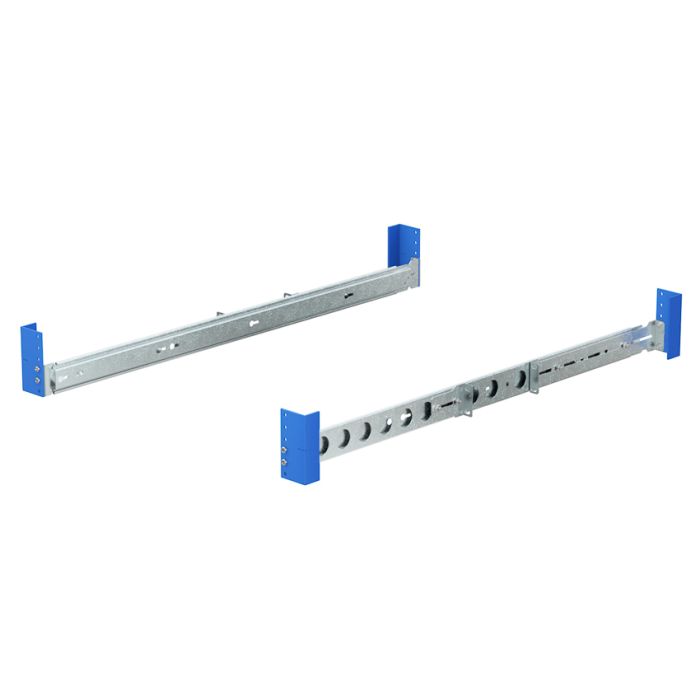
1. Sliding Rails
First, sliding rack rails allow the server to slide in and out of a rack, similar to opening a desk drawer. This means that the server can be pulled out without being detached, making it easier to service or replace components while staying connected.
Sliding rails are best for data center facilities and IT environments that require easy access, maintenance, and serviceability. This rail type is also helpful for technicians who need quick front and rear access to the equipment.
Key Advantages of Sliding Rails
- Full Access – Sliding mechanism allows for easy maintenance and upgrades.
- Safety – Reduces the risk of dropping or damaging your equipment.
- Cable Management – Some sliding rail kits feature a cable management arm that moves with the server, preventing cable snags or damage.
- Time Saving – Ideal for environments where uptime and quick serviceability is crucial.
For environments with limited space or setups that need frequent hardware changes, sliding rails are worth the investment.
2. Fixed Rails
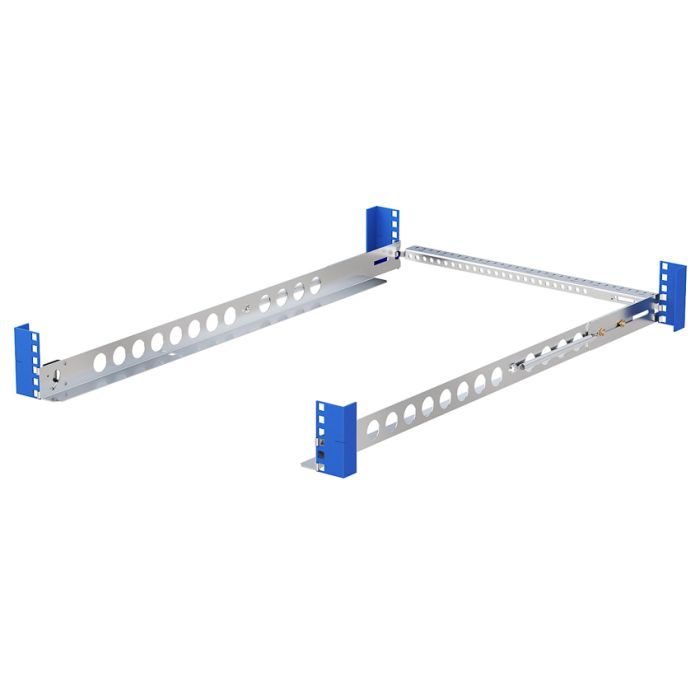
Second, fixed rack rails do not have a sliding mechanism, keeping the server firmly secured in place within the rack. It’s designed as a long L-shaped bracket that supports the edge of your equipment, providing a stable and secure mounting solution. However, fixed rails aren’t flexible and readily accessible when it comes to server positioning. In order to perform maintenance, it must be completely removed from the server rack.
Fixed rails are best for installations that don’t require frequent hardware changes, so it’s a great solution for budget-conscious deployments or rack setups where accessibility is limited.
Key Advantages of Fixed Rails
- Cost-Effective – Typically less expensive compared to sliding rails.
- Stability – Server is securely locked into place, reducing movement and vibration.
- Easy Installation – “L-shaped” bracket design makes them easy to install, serving as a popular choice for data centers.
- Low Maintenance – Its simple design means fewer components wearing out or failing over time.
With its study and stationary design, fixed rails provide long-term stability and reliability while remaining simple to install. Because fixed rail kits cost less than sliding rail kits, they’re useful for large data centers where cost-efficiency and simplicity is prioritized.
3. Tool-less Rails
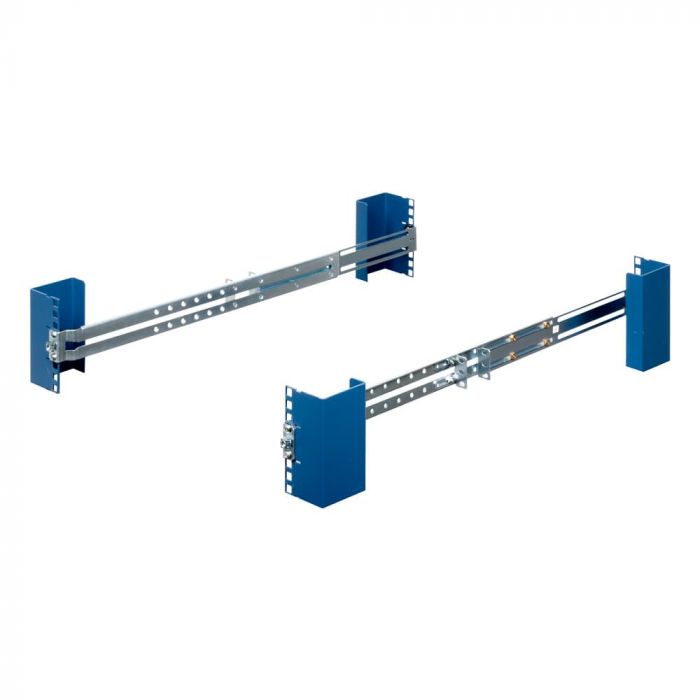
And third, tool-less rack rails use latches or tension mechanisms to attach to square-holed rack frames for mounting servers or other equipment. As the name implies, these rails don’t require screws or tools, so they help to speed up the installation process.
Tool-less rails are best for rapid deployments, rack setups that need to be reconfigured often, or individuals who prioritize convenience.
Key Advantages of Tool-less Rails
- Quick Installation – by eliminating the need for hardware, so the process of equipping server racks is quick.
- Easy Adjustments – For frequent repositioning or upgrades, tool-less rails are easy to install and remove.
- Time and Labor Saving – Ideal for large-scale deployments or temporary setups.
- Less Installation Errors – Easy design mechanism allows for consistent alignment.
If speed and flexibility are important, then tool-less rails are the way to go. In fast-moving IT environments, tool-less server rails make installation and equipment swaps quick and effortless. They’re great for test labs, demo racks, or managed service providers that need speed and flexibility for hassle-free mounting.
Key Factors To Consider
Overall, rack rails are essential for data centers, as they provide a secure and stable support for equipment. Selecting the correct rail type for your setup depends on your budget, environment, and maintenance needs. This means you need to consider how often you’ll be accessing or replacing the equipment, the available space within your rack, and the importance for rapid deployments.
However, when choosing rack rails, it’s important to consider other aspects than just the rail type. Depending on your server’s make and model, the rails must be compatible with your server’s dimensions for a proper fit. Weight capacity is also critical, as the rails need to safely support the full load of your equipment.
And finally, you can’t leave out maintenance requirements. If you expect to access your equipment often, then sliding or tool-less rail will make servicing easier and flexible in comparison to fixed rails. By taking these factors into consideration, it will ensure a smooth installation process.
Do You Need a Custom Rail Kit?
RackSolutions can create custom products for your specific server needs. We can design custom solutions in house and immediately send out prototypes. If you need a custom rack rail kit, then we can make it happen. Contact us today and we’ll be ready to discuss with you!
FAQs: Rack Rail Types
What are Universal Rails?
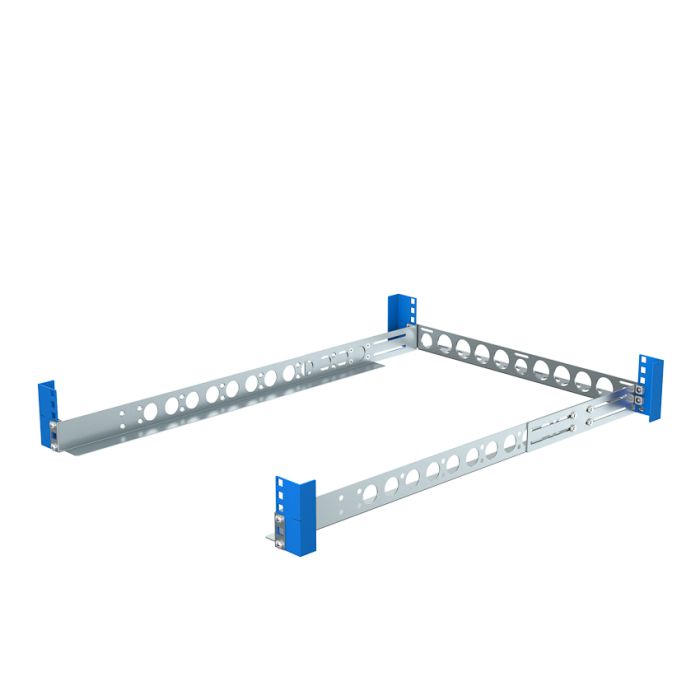
If you want to avoid the ongoing expense of repurchasing rails kits, then Universal Rails are also an option. The RackSolution Universal Rack Rails serve as an alternative for the standard issued OEM rails by HP, IBM, Dell, and other leading OEM server manufacturers. These rack mount rails are a fixed rail type, providing a flexible solution for incompatible rack rails within 19” server racks.
This rail type works with more than just 19” server racks. You can attach these rail kits to server racks that are wider or narrower. We offer 1U, 2U, or 3U universal rails that can support a variety of server racks, including those with square, round, and threaded holes.
What’s the difference between mounting depth and equipment depth?
The mounting depth refers to what sized rack the rail will fit inside. For example, a Cobra 90 Rail (opens in a new tab) with a mounting depth range of 20” – 30” will fit inside of racks with 20” – 30” of space between the connection points on the uprights. Equipment depth describes what length equipment must be to fit on the rail. Universal Rails can mount equipment up to 35” deep. This is mostly relevant to rails that are compatible with multiple servers.
What’s the easiest way to install cage nuts?
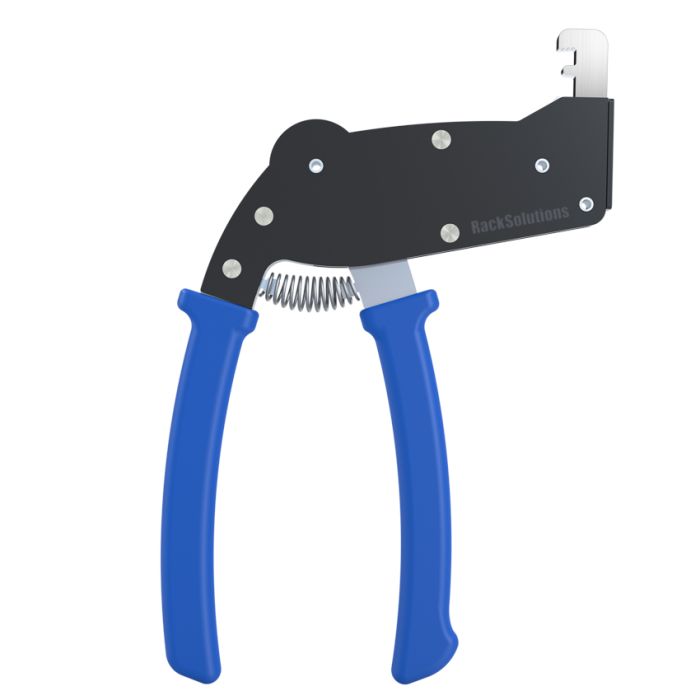
You can install cage nuts without tools, but after putting in more than a few with just your hands, it can be uncomfortable and potentially hurt your hand. With the Cage Nut Tool, you can avoid injuries and discomfort.
Do you include hardware with the rack rails ?
Most RackSolutions Rack Rails work with square, round and threaded hole racks. We include all the hardware for mounting the rails in any type of rack. All you need is a phillips head screwdriver, unless you’re using our tool-less rails in which case you don’t need any tools at all.