Data center cooling in the process of maintaining optimal temperature and humidity levels in data center facilities. By removing excess heat from IT equipment, businesses are able to maintain safe and efficient operating conditions. Cooling techniques include air conditioning (CRAC/CRAH), liquid cooling, free cooling, heat reuse, and hot/cold aisle containment, and more.
But why are cooling systems essential for data centers? For starters, data center facilities use significant amounts of energy to power high-density servers. However, this leads to those servers generating lots of heat, which can cause hardware failure or damage. Delivering continuous power also consumes a lot of energy, so it comes at a significant cost.
Depending on the facility size, a single data center can require as much electricity as 5,000 – 100,000 homes. Plus, with AI hyperscale data centers on the rise, some facilities may consume power that goes beyond 100,000 homes. By using cooling systems, data center facilities can protect their infrastructure from overheating and reduce power consumption.
Data Center Cooling Market Report 2026
The data center cooling market is projected to grow from $19.5 billion in 2025 to $22.81 billion in 2026, at a compound annual growth rate (CAGR) of 17%. By 2023, the market is expected to reach $42.81 billion. This growth is driven by the expansion of hyperscale and edge data centers, along with demand for energy-efficient cooling solutions, high-density server racks, and cloud computing. Another contributing factor is the increasing electricity consumption in IT facilities, along with the widespread adoption of aisle containment systems.
At the same time, the rise of AI-powered data centers and the push for carbon-neutral operations are accelerating investments in advanced cooling technologies and stricter energy regulations. Collectively, all of these trends are driving a fundamental shift toward more advanced, scalable, and energy-efficient cooling strategies for the market.
Data Center Cooling Trends: What To Consider
When it comes to data center cooling strategies, there are several key factors to consider to ensure efficiency, scalability, and long-term performance. These factors include geography, the role of natural gas and renewable energy, and the adoption of liquid cooling technologies.
1. Geography
Data center geography is a key strategic advantage as operators seek locations with efficient energy access and reliable cooling resources. Free cooling, a strategy used for data centers, utilizes outdoor temperatures by pulling cool air into the air circulation system. It’s a cost-effective solution that reduces the need for energy-intensive cooling.
To maximize efficiency with free cooling, data centers need to be located in regions with cooler annual temperatures, clean air quality, and sufficient space. For locations with very high average annual temperatures, direct free cooling may not reach its max potential.
2. Natural Gas and Renewable Energy
Natural gas is expected to play a key role in alleviating grid constraints in the U.S. Using natural gas provides reliable power to meet the demands of AI data centers and serves as an immediate and short-term solution with 24/7 dispatchable power.
However, the use of natural gas doesn’t diminish the importance of renewable energy. With renewable energy, it powers energy-intensive cooling systems and supports more sustainable data center operations. It’s also great for high-density workloads while meeting carbon reduction goals and long-term costs.
3. Liquid Cooling
As rack densities increase, traditional air cooling systems aren’t enough, especially for AI or high-performance computing workloads. Instead, liquid-based cooling solutions are highly desirable to efficiently dissipate heat. Methods include direct-to-chip liquid cooling, immersion cooling, rear-door heat exchangers, and more. They offer significantly higher thermal efficiency, so operators can support higher-density workloads while reducing energy consumption.
To keep up with growing thermal regulation needs, modular liquid cooling systems will be useful for can be easily deployed and scaled incrementally. While air cooling won’t disappear, hybrid environments combining air and liquid cooling are also becoming common, especially in data center facilities transitioning to support AI workloads.
The Future of Data Center Cooling
Efficient and reliable cooling will always be crucial for data centers. As demanding workloads continue to evolve, so too must the infrastructure that supports them. With the rise of AI and sustainability requirements, businesses must adopt advanced, high-performance cooling solutions to stay competitive and support future infrastructure needs.
Ultimately, heat management is a big challenge for modern data centers. By investing in monitoring, automation and predictive analytics, data center operators identify and implement the cooling strategies that best support performance, scalability, and sustainability.
RackSolutions Server Racks, Rails, Shelves, and Accessories
Reliable and efficient equipment is just as critical as cooling technologies in data centers. RackSolutions provides a comprehensive selection of server racks, rack rails, shelves, and cooling accessories that are designed to efficiently help you manage your servers and storage systems. Contact us at info@racksolutions.com or call 888-505-RACK to get in touch with our Sales and Technical Support team.
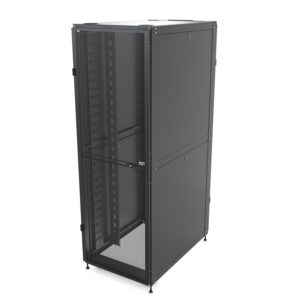
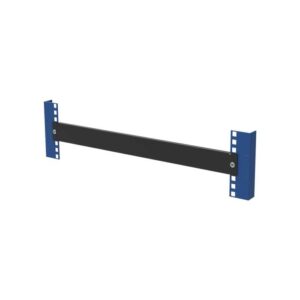
- Racks: Our 4 Post and 2 Post racks are an effective way to mount your equipment. We provide open frame racks, enclosed racks, and wall mount racks.
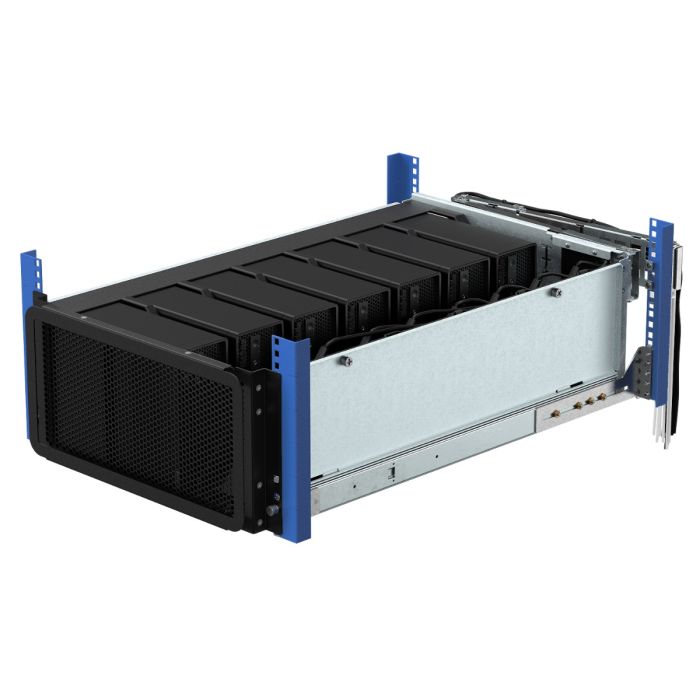
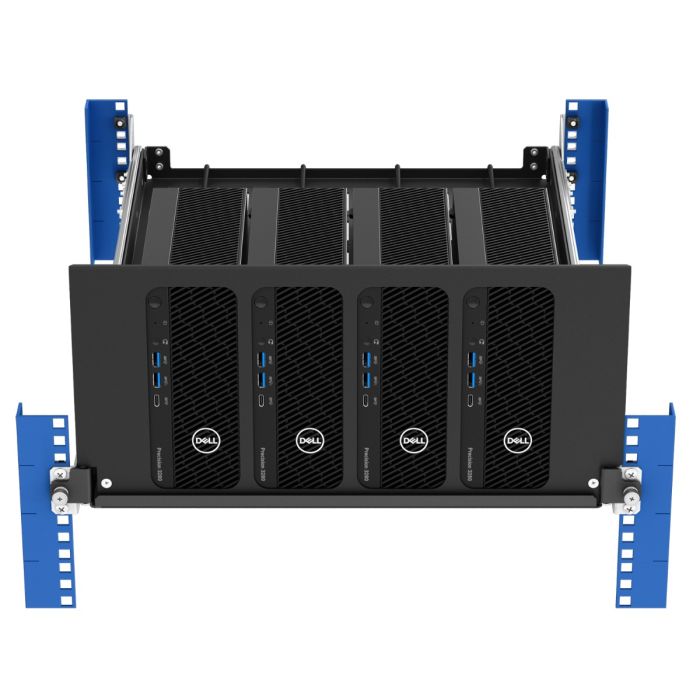
- Shelves: We provide rack shelves that come in different sizes and configurations to serve a wide variety of needs. To store your servers on the rack, you can choose between our fixed shelf or sliding shelf. For enterprise deployments and hyperscale data center environments, we provide HyperShelves, which serves as a high density and cost saving PC rack mounting solution. Or for teams developing apps, software, and websites across a wide range of devices, the Modular Rack Shelf offers a flexible solution for testing on real hardware.
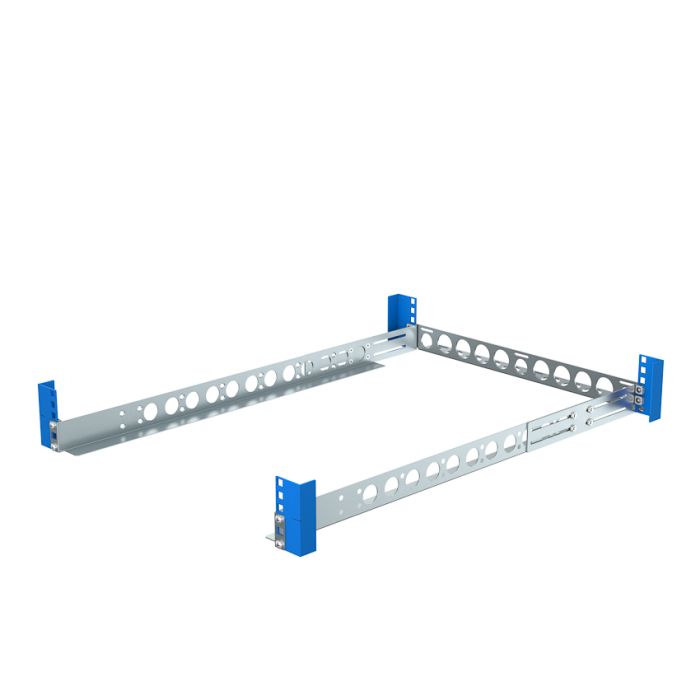
- Rails: Server rack rails are a great way to mount your servers in a 4 post or 2 post rack. We provide a large selection of rails, rail kits, and universal rails.
- Rack Airflow & Cooling Accessories: Our airflow and cooling rack accessories are built to prevent overheating. This ensures your data center operates at peak efficiency and reliability at all times. Other than rails and rack shelves, we also provide blanking panels, converters and adapters, individual cage nuts and screws, and more.
FAQs: Data Center Cooling Trends
Will there be an increase in Edge Data Centers?
Edge Data Centers are decentralized facilities that deliver cloud computing resources and cached content to local end-users. They’re able to provide lower latency and improved performance. Unlike traditional data centers, which are typically large and centralized, edge data centers are situated closer to the users they serve. They are often within urban areas or at the network’s edge.
So yes, there will be an increase in edge data centers as they continue to expand in factories, logistics centers, hospitals, retail digitalization, smart city deployments, and AR, VR and more. The major growth in these data centers is due to the proliferation of IoT devices and 5G technology. This leads to the driving demand for low-latency and real-time data processing.
Why are cooling systems incorporating AI capabilities?
Due to the high demands of AI environments, traditional cooling environments alone aren’t able to provide full support. By incorporating AI capabilities, cooling systems enable continuous monitoring of workload conditions and automatic adjustment of cooling outputs. Rather than a static cooling solution, a dynamic cooling solution allows for reduced energy waste, higher overall efficiency, reduced on-site intervention, extended system longevity and more.